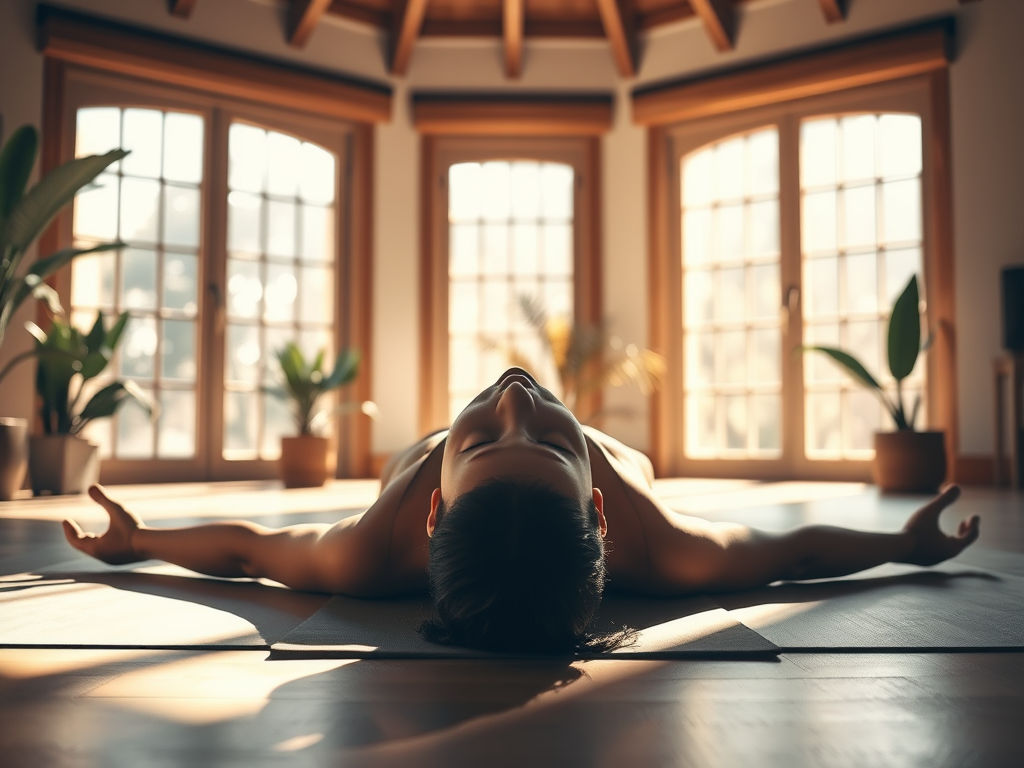
It is the moment every yogi waits for, yet many find the most difficult. After sixty minutes of flowing, sweating, and balancing, you finally hear those sweet words: “And now, make your way onto your back for Savasana“, or if you’re in one of my classes “welcome to your Savasana”(in my Beyonce welcome to Renaissance energy).
While it may look like a simple nap, Savasana (Corpse Pose) is arguably the most important posture in your entire practice. It is the bridge between the effort of the mat and the ease of daily life. Today, we’re diving deep into why this “final rest” is a physiological necessity and a spiritual homecoming.
The Physiology of Stillness: What’s Happening in the Body?
To understand Savasana, we have to look at the Autonomic Nervous System (ANS). Most of our modern lives are spent in a state of “High Alert,” governed by the Sympathetic Nervous System (the “fight or flight” response).
When you enter Savasana, you are consciously triggering the Parasympathetic Nervous System (PNS), often called the “rest and digest” state. Here is the science behind that shift:
- Vagus Nerve Stimulation: Deep, rhythmic breathing in a horizontal position stimulates the vagus nerve, which sends a signal to your brain that it is safe to relax. This lowers your heart rate and blood pressure almost immediately.
- The “Rebound” Effect: During a vigorous yoga flow, your body produces cortisol and adrenaline. Savasana allows these hormones to level out, preventing the “wired but tired” feeling and replacing it with a sense of calm.
- Cellular Integration: Think of Savasana as “hitting save” on a Word document. As the muscles go slack, the neurological pathways created during your physical practice are integrated into your long-term memory. Your body literally learns the movements you just practiced while you are lying still.
- Thermoregulation: As your body temperature drops slightly during rest, your metabolic rate slows down, allowing for deep tissue repair and recovery.
The Spiritual Wellness: A Return to the Self
While the science explains the how, the spiritual aspect explains the why. In Sanskrit, Shava means “corpse” and Asanameans “seat” or “posture.” This isn’t meant to be morbid; it’s a practice of symbolic surrender.
1. The Practice of Pratyahara (Withdrawal of Senses)
Savasana is the ultimate stage of Pratyahara. By closing your eyes and settling into stillness, you turn the “flashlight” of your consciousness inward. You stop reacting to the world around you and start observing the world within you.
2. Cultivating the “Witness” Mind
In Savasana, the goal isn’t to empty the mind—that’s nearly impossible. The goal is to become the Witness. You watch thoughts pass by like clouds in the sky without grabbing onto them. This builds a spiritual resilience that helps you stay calm when life gets chaotic outside the yoga studio.
3. The Ego’s Mini-Death
By mimicking a corpse, we practice letting go of our attachments—our jobs, our worries, our physical appearance, and our to-do lists. It is a humble reminder that we are more than what we do; we are the stillness that remains when the doing stops.
Why You Should Never Skip It
Skipping Savasana is like eating a five-course meal and leaving before dessert or worse, before your body can digest it. Without those final five to ten minutes, you walk out of class with your nervous system still in a state of “arousal.” You might feel jittery or exhausted rather than grounded.
Savasana is where the magic happens. It is where the physical effort transforms into mental clarity.
Thank you so much for taking the time to explore the depths of this practice with me today. In a world that prizes “hustle” and constant movement, choosing to learn about the power of stillness is a radical act of self-care.
We are so glad to have you here in our community. Whether you’re a seasoned practitioner or just rolling out your mat for the first time, you are always welcome back here to recharge and refocus.
Namaste, and see you back here soon!
Love and Hugs
B🐝
Leave a Reply